

Welcome to OctoTable
Connect, share, and engage with community and build relationships.
Please log in if you are already a member or sign up for an account.
Learning how to manage marketing for restaurants in 2026 means building a consistent digital presence that supports people in three key moments: when they search for you, when they decide whether to visit you, and when they evaluate whether to come back.
The reality is that today every restaurant, from the neighborhood pizzeria to the fine dining restaurant, competes on multiple fronts. In this guide, we’ll explore the main levers of restaurant marketing with a practical and actionable approach: Google Maps to help people find you, your website to help them decide, Instagram to create desire, and email and SMS to encourage repeat visits. Everything explained clearly, without unnecessary technical jargon.
Before investing time and energy into any marketing activity, you need clarity on three elements: what you want to achieve, who you are talking to, and what makes you different from your competitors. Without these foundations, you risk wasting resources on ineffective actions.
Defining Your Objectives
Marketing works best when it focuses on a clear goal. You can’t work on ten different fronts at the same time and expect concrete results. Choose a priority and build your actions around it.
Some realistic objectives for restaurant marketing include:
Increasing bookings on weekdays, when the dining room is less busy
Filling a specific time slot that is underutilized
Being chosen over nearby competitors when people search for “restaurant near me”
Encouraging repeat visits by turning occasional guests into loyal customers
A clear objective allows you to measure results and understand whether your actions are actually working.
Consistent, High-Quality Content
Photos, messages, and offers should tell the same story on Google Maps, on your website, on Instagram, and in emails. When expectations are clear and consistent, people arrive already knowing what to expect.
Consistency in marketing for restaurants means that a customer who discovers you on Instagram, then visits your website, and then reads your Google reviews, should always recognize the same restaurant, the same style, and the same promise.
Learning how to create high-quality images and content for your restaurant ensures that your online presence truly reflects the quality of your venue.
Google Maps is the starting point for most customer decisions. When someone searches for a restaurant in your area, your Google Business Profile is often the first—and sometimes the only—touchpoint before booking.
Local searches capture people who are already ready to book. In that moment, three elements matter most: high-quality photos, genuine reviews, and a complete profile. Google Maps is not just a map—it’s a digital storefront that communicates professionalism before a customer ever walks through your door.
An optimized Google Business Profile includes updated opening hours, the correct category, recent photos (exterior, dining room, dishes), visible contact details, and active review management. Responding to both positive and negative reviews shows care and attention toward customers.
The most effective marketing strategies for restaurants always include a strong, optimized presence on Google Maps, because it is the first point of contact for people searching nearby.
A restaurant website doesn’t need to be complex. It must answer a few essential questions as quickly as possible: where you are, when you’re open, what you offer, and how to book. If this information is clear, the website does its job.
A visitor landing on your website wants to find immediately:
Where you are and how to get there
Opening hours
A readable and up-to-date menu
How to book or contact you
What makes you different, explained in one clear sentence
If any of this information is missing or hard to find, the visitor will likely choose another restaurant.
Local SEO for Restaurants
Naturally including your city, neighborhood, and type of restaurant helps Google understand who you are and show you in the right searches. For example: “Seafood trattoria in Trastevere” instead of “Welcome to our restaurant.”
Consistency between your website and your Google Business Profile strengthens your local authority and improves your visibility in local searches.
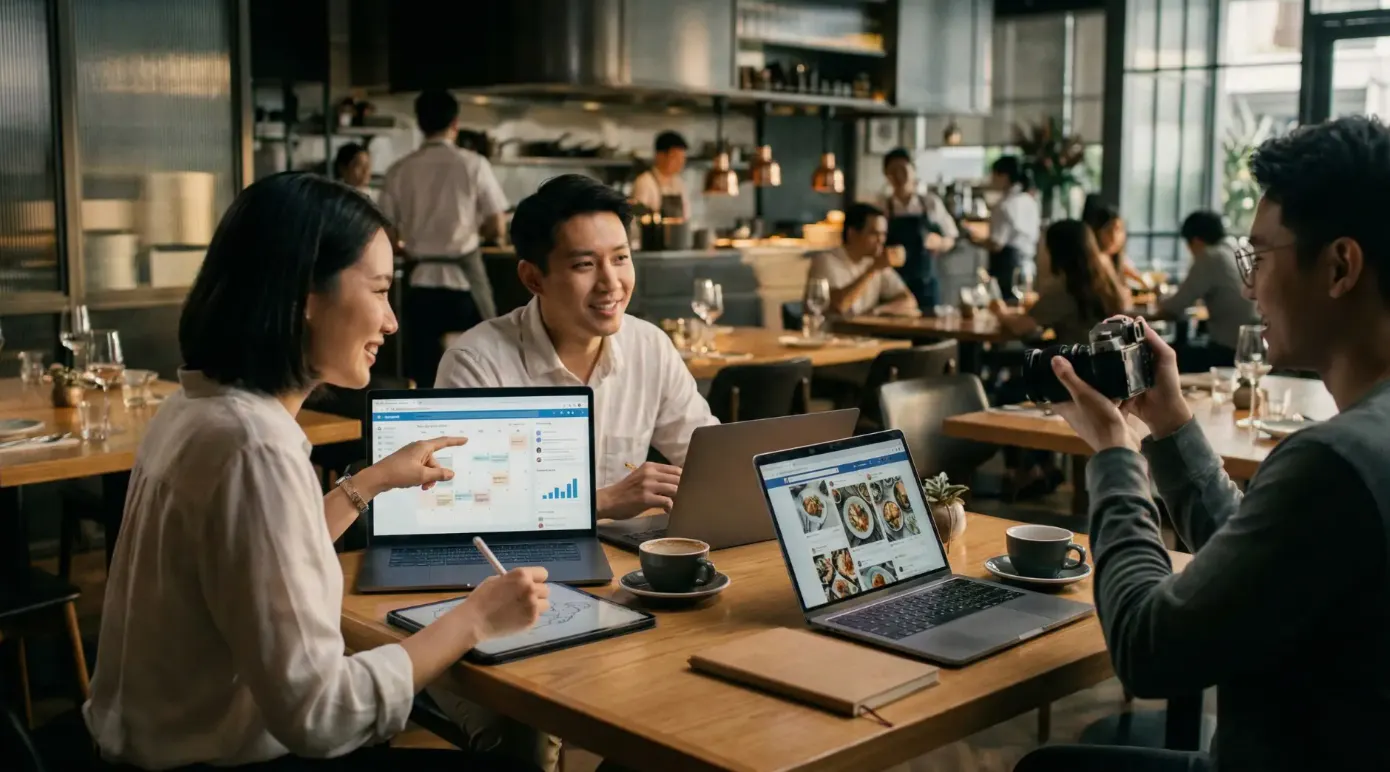
Instagram is the perfect channel for restaurants because people choose with their eyes. Atmosphere, dishes, and vibe are all visual—and Instagram is designed exactly for this purpose.
People don’t choose a restaurant only for the food; they choose an experience. Instagram allows you to communicate that feeling before anyone even steps inside. It helps people imagine the experience and visualize themselves there.
Social media marketing for restaurants works when it creates the desire to “be there.”
When to Use Sponsored Instagram Posts
Sponsored Instagram posts are not suitable for every situation. They make sense when you want to:
Increase awareness among people in your area who don’t know you yet
Promote a special menu or a new offer (new dish, event, themed night)
Fill quieter days or time slots, such as weekday lunches or dinners
The goal is not simply “running ads,” but having a clear objective: profile visits, direct contacts, reservations, or at least real intent to visit.
Organic content (regular photos and daily stories) builds familiarity and relationships over time. Paid ads amplify what already works well, expanding your reach to a broader audience.
You can’t rely only on ads. Your profile must remain active and engaging even without paid promotion.
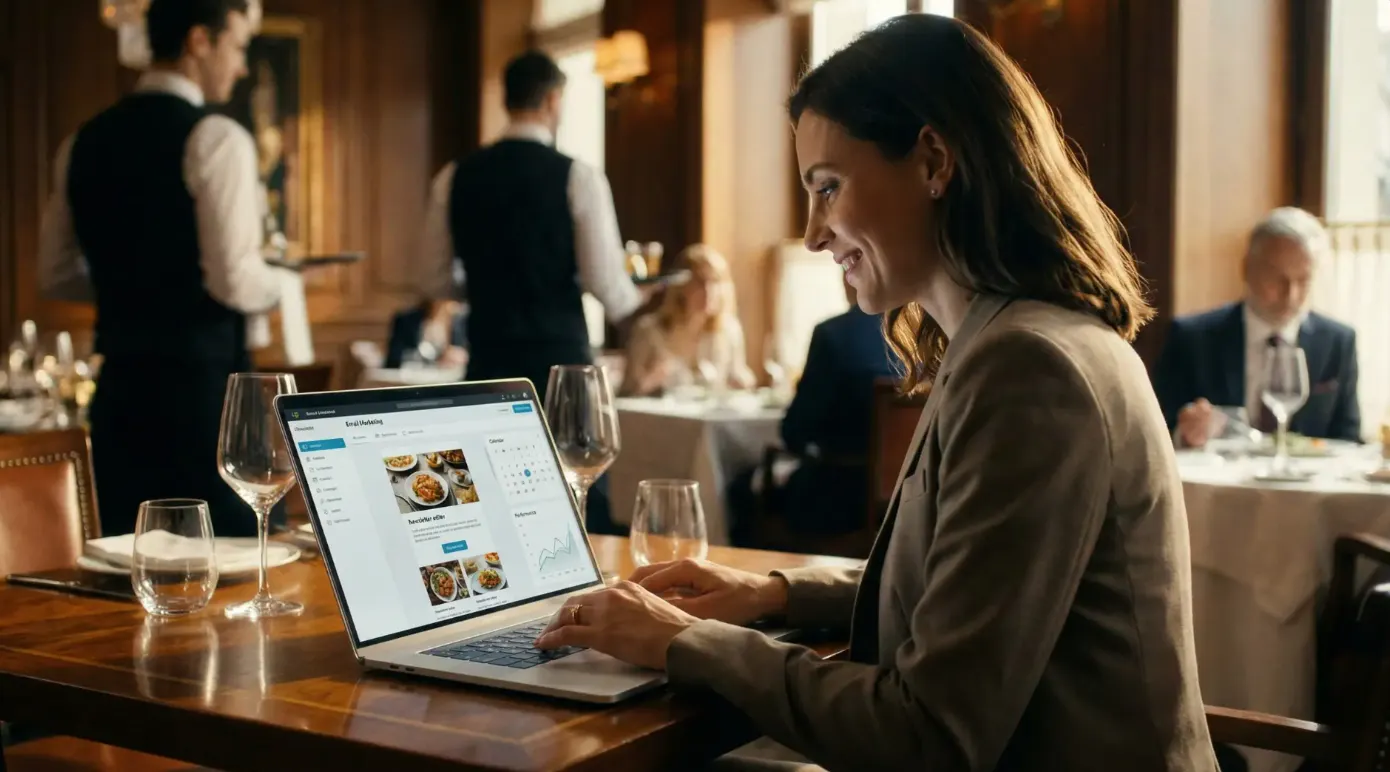
Email and SMS are powerful tools in restaurant marketing because they allow you to speak directly to people who already know you. You don’t need to capture their attention—you already have it. Your job is to maintain it.
Unlike Google Maps or Instagram, where you compete with hundreds of other restaurants, email and SMS give you direct access to your customers’ inboxes. These channels help build habits and relationships, not just promotions.
Anyone who has shared their contact details has already shown interest. Your goal is to bring them back.
What to Communicate Without Being Intrusive
Email marketing for restaurants works when it provides value, not just discounts. Useful messages include:
New menus or seasonal dishes
Events or special evenings: tastings, themed dinners, guest chefs
Limited availability with an elegant tone: “Last tables available for…”
Personal occasions: birthdays or anniversaries (if collected properly)
The goal is not to sell at all costs, but to stay present in the minds of your customers.
The Right Tone and Frequency
A good restaurant marketing email or SMS is short, clear, and communicates a real benefit. Even “you’re the first to know” is a value.
Frequency matters. Fewer, well-crafted messages are better than frequent, irrelevant ones. One communication every 2–3 weeks is sustainable. Too many messages lead to fatigue and unsubscribes.
SMS Marketing for Restaurants
SMS is ideal for short, timely messages: last-minute availability, quick updates, confirmations. SMS marketing for restaurants is direct and effective, but it must be used sparingly to avoid feeling intrusive.
Doing marketing for restaurants without tracking results means relying on guesswork. Monitoring helps you repeat what brings customers and reduce what doesn’t work.
Without complex metrics, you can observe:
How many people call from Google or your website
How many reservations come from each channel (Google, website, Instagram, phone)
How many customers return after an email or SMS campaign
Compare results week over week or month over month, not day by day. Restaurant marketing usually grows through small, continuous improvements—not instant, explosive results.
Change one thing at a time: a different photo, a different message, a different posting day. If results improve, keep it. If not, revert. Methodical testing is the only way to understand what truly works for your specific restaurant.